Articles by "iPhone Tricks"
Showing posts with label iPhone Tricks. Show all posts
How to Hide Photos on Your iPhone and iPad

Smartphones are highly personal devices and, therefore, it is not surprising that we store our confidential data and many of our personal photos on them. In addition, cameras on devices such as the iPhone have a great impact, so it is quite obvious for us to visualize many of our personal moments and share them. However, we do not want anyone to see our personal photos on our iPhone, right?
Face ID on iPhone X Not Working or Disabled? Try This

Recently, iPhone X was released and there have been many changes. There have been a lot of changes in iOS, but the biggest change is that the Home button is omitted. The home button with the fingerprint scanner (intended pun) has been removed from the device. Instead, Apple has probably introduced Face ID, a better and more secure biometric security system. Unlike Face Detection on Android devices and Iris Scanners on Galaxy S8 / S8 + or Note 8, Face ID uses a different technology. It uses a dot projector to read all information using over 30,000 invisible dots on the face and floodlights and infrared cameras that project infrared rays. The entire data is then collected and processed to create an accurate 3D map.


Now everything sounds great, but Apple has put a lot of effort into improving the privacy features. Therefore, in some cases, your face ID may be disabled to protect your privacy. On older iPhones, you could turn off Touch ID by pressing the power button five times. If you use iPhone X, Face ID is disabled.

  • To enter emergency screen or turn off device
  • If you reboot your device
  • You have not unlocked iPhone X using Face ID within 48 hours.
  • If you try to unlock using Face ID twice
  • You have not unlocked in 6 days using a passcode / pin / password.

So if you want to use Face ID again, unlock your device with your PIN or password, then lock your device again and try unlocking again with your face ID. Also, if you do not actually purchase exaggeration around Face ID, you can go to Settings -> Face ID and Password to completely disable Face ID.
How to Add a Virtual Home Button to the iPhone X

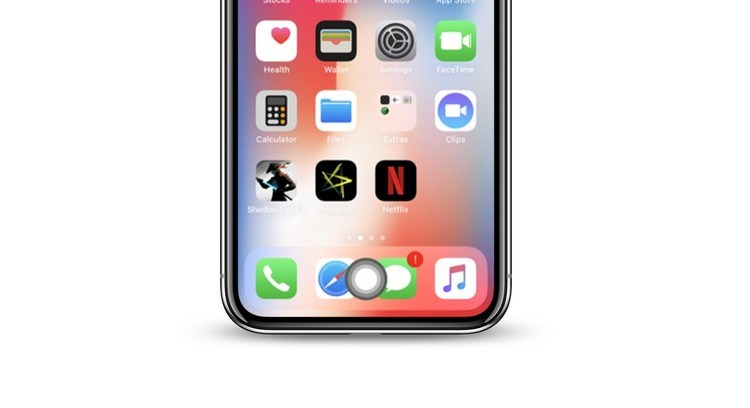
iPhone X has brought sea changes to the old design language of iPhone, which has changed little over the last decade. The past round home button (at least on X) now Apple has added a virtual home bar, but many eager Apple users are not ready to say goodbye to the actual home button. yet. So, if you're in that group, I'm glad to know that there's a workaround that displays a virtual onscreen home button at the bottom of the screen. Interested? To activate, you need to:

Get Virtual Home Button on iPhone X


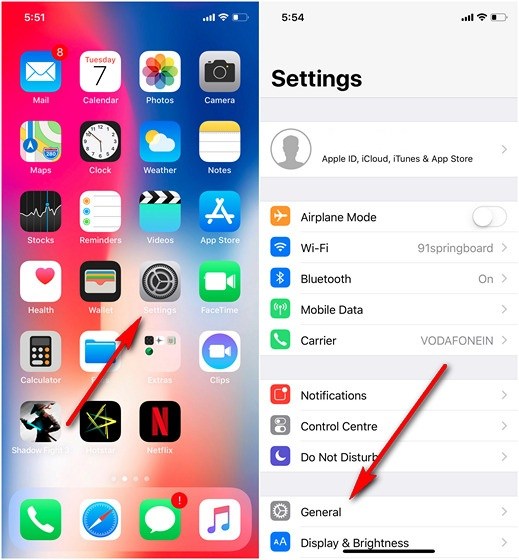
#1: First, tap the "Settings" icon on the home screen and select "General."

How to Add a Virtual Home Button to the iPhone X

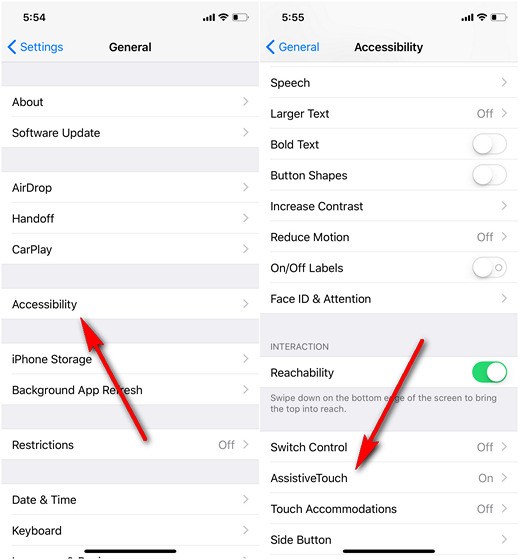
#2: Now go to "Accessibility > Assistive Touch".

How to Add a Virtual Home Button to the iPhone X

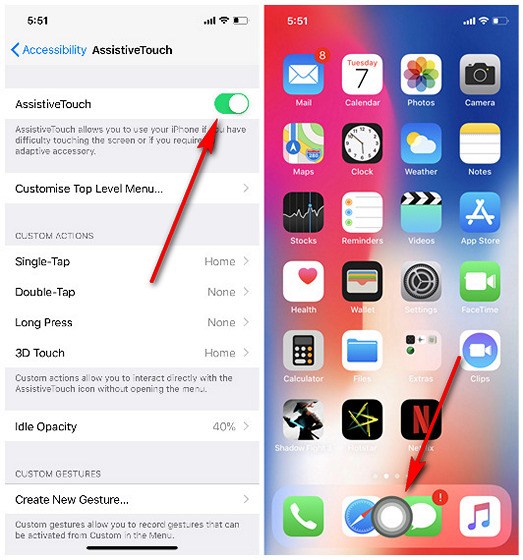
#3: Turn on the Assistive Touch toggle and the Virtual Home button will appear on the screen as shown in the screenshot below. You can drag to any side of the screen as desired.

How to Add a Virtual Home Button to the iPhone X

That's all. It's easy to activate the virtual home button on iPhone X. It is visible on all screens and works the same way as the actual home button. If you think you are walking your way, drag and drop it to the side you want.

If you are new to the jailbreak world, it can be a very daunting place. There is no denying that there are a number of malicious disk escapes in the wild. Also, there seems to be a lot of noise surrounding the legal setting of the jailbreak. So, today I'll tell you how What is Jailbreaking and Is Jailbreaking Legal?

What is Jailbreaking?


I would quote Wikipedia a lot, so here's what I should say about jailbreak:

Jailbreak: (Noun) Escape from Prison (Jail).

Maybe you're thinking about what you're doing even remotely with the iPhone. To answer this question, we need to understand the "philosophy of the park" Apple's philosophy. A "walled garden" is a closed platform where the provider, in this case Apple, decides to exercise strict control over applications, content and media. What this basically means is that Apple scans each application carefully and controls the applications that you can install on your iOS devices. But not just about applications, these restrictions are imposed throughout the iOS, thus making it really a "walled garden".

Jailbreak is the process of escaping this "fenced walls" and removing all Apple software restrictions imposed by Apple. So, now you can get the measurement from Wikipedia definition, right? Mobility around these restrictions may be anything, such as installing apps that Apple does not agree with or customizing the Evon device in a way that Apple will not normally allow you to do.

Now that you understand what jailbreak is actually, you're probably curious to learn Apple's position on this whole jailbreak thing. Let's see whether jailbreak is legal and what Apple thinks about it.

Is Jailbreaking Legal?


Given the large number of laws in fact, the answer is not black and white. Fortunately, in most countries, the laws tend to go further down the road Jailbreaking is perfectly legal. Escape is usually governed by laws that protect digital rights management mechanisms, such as the Digital Millennium Copyright Act (DMCA ). In 2012, the US Library of Congress exempted jailbreak iPhone from the new Millennium Copyright Act , making it legal. The Library of Congress holds a meeting every three years to discuss and reassess new exemptions. Surprisingly, while the iPhone jailbreak was made legal return in 2012, it was only in 2015 when the jailbreak made the iPad. The next meeting is scheduled for 2018, and it is very possible that jailbreak iPhone / iPad will remain perfectly legal, at least in the United States.

In countries such as Canada and New Zealand, laws allow circumvention of disaster risk management for purposes other than copyright infringement, which essentially means that escaping from prison is entirely legal in these countries. There is no country, to my knowledge, that jailbreak iPhone / iPad as a crime punishable.

Of course, all this does not mean that Apple likes the idea of jailbreak Edifies. Here is what support Apple page to say about hardware jailbreak:
Unauthorized modification of iOS can cause security vulnerabilities, instability, shortened battery life, and other issues..

For one, yes, Apple is right about it. As you will see in the next section, a jailbreak device can cause security flaws and poorly designed design that can cost you phone instability and battery life. Another important takeaway of their official statement is that your jailbreak your iPhone blanks your warranty. Because of this, Apple reserves the right to deny the service to the iPhone or iPad.

But wait there is a plot development: Apple does not completely hate the jailbreak society either. Because the community helps to detect security vulnerabilities, which then Apple addresses and debugging quickly. Also, there have been many occasions when Apple has stolen a borrowed function from a third party jailbreak disk and baked them directly into the iOS. All in all, I would like to summarize this section by comparing the relationship between Apple and the jailbreak community that Joker and Batman: "I do not, I do not want to kill you! What would I do without you? Complete me." (This was some spot analogy!)

Is Jailbreaking Safe?


The Cydia application store is an alternative to the Apple Store and home to thousands of jailbreak / disc applications. Cydia hosts many awesome jailbreak disc but considering the number of warehouses and the lack of central authority, most applications are largely unlit. Such applications can contain malicious code that can infect your iPhone with adware, spyware and trojans.


There have been at least 5 cases in the last few years when malicious applications have been heavily exposed to the iPhone. "Unflod", discovered in 2014, Apple's user credentials are captured and sent to a server in China. "Zisser Times", discovered in late 2014, stolen personal data from the user's device and executed remote commands from an external server.

Therefore, the short answer to whether jailbreak safe for the average Joe is: no. However, if you are somewhat of an advanced user who understands the inherited risks with them, the idea of ​​escaping may not look bad. If you are a person who values ​​freedom on security and is going to jailbreak anyway, I would recommend you something: do not install the tweaks from the shady third party repositories. Also, keep away from pirated applications and has God, turn on two authentication agent for your Apple Ed.

Jailbreaking vs Rooting?


Speaking incidentally, iPhone jailbreak will be the equivalent of rooting the Android phone. It's only when you dive into my technical nitty gritty that you understand the difference between them.

Technically, Jailbreak is the process of installing a set of kernel patches that give you root (unrestricted) access to the iOS file system. Rooting is the process of finding exploit on the Android device to gain access to the root administrative level. This may be the only similarity.

These days, most Android manufacturers allow you to open boot loader on their phones. You can Cidlode applications on Android, all without having to root your device. In contrast, Apple ships the iPhone with a boot loader locked and it does not allow sidelwading of applications without jailbreak. Thus, it is only the root side of the jailbreak and rooting which is similar.

Also, Android being an open source means that you can replace the stock operating system and install a completely different custom ROM. If this sounds too much, you can even install the cupcd window and show off your customization skills. Given the nature of the closed source, this is not possible with iOS, even if it is jail.

The main takeaway of this discussion is this: Android displays much lower restrictions than the iOS out of the box. Even after jailbreak the iPhone, the amount of freedom you get with the iPhone iPhone is nowhere close to your Android device rooted. Do not get me wrong, jailbreak opens up a lot of potential on your iPhone, but the truth is said, rooting robot puts Android in the far league.

Understand Jailbreak Better?


I certainly hope that this article helps you understand the best jailbreak and answer most of the questions surrounding it. Now that you understand the security aspects related to jailbreak, you are in a better position to answer whether you should jailbreak your Edifice. Always remember: With great power comes great responsibility. So, if you have decided to take a step, jailbreak your iPhone once you have done that, browse through our many articles related to jailbreak. As always, if you have any unanswered queries, please let me know in the comments section below and I would be more than happy to address them!
How to Hide Photos on iPhone | Viva Tricks

Hide pictures in the iPhone is the user desire that saves images on the phone but do not want anyone to see the Camera Roll, how Apple calls the gallery. Not always using an access password on the smartphone is enough to guarantee the privacy of the media. The good news is that there is an application that allows you to actually hide these files. The  Secret Photo Calculator is an app available for download on the iPhone ( iOS ) that appears to be a calculator icon to leave their "secret" photos.

In this tutorial, you can follow the step by step how to use the Secret Photo Calculator to hide your images on the phone Apple.

Step 1. Accessing the app for the first time will give you instructions to create a password that will be used to access the hidden photos. Confirm by tapping "OK". On the calculator screen, enter the password and touch the percent symbol (%). Then, repeat typing the password and touch it.


Step 2. The first time you access the program, it asks if you want to use the Premium version or not. If your answer is yes, tap "Get started." But if you want to use the program without paying, touch "or continue with the limited version". On the next screen, touch the plus symbol (+) to create a new hidden photo album.


Step 3. On the "New album" screen, enter a name for the album and touch the confirmation symbol in the upper right corner. At the "Import photos" screen, touch "Camera roll" or any of the albums that contain the photos you want to hide.


Step 4. Within the selection window, touch the photos you want to use to individually select or touch the "Select all" option to select all photos.


Step 5. When importing an image, a blue bar will be displayed reminding you to delete the photos from the camera roll, so they are actually hidden. To do this, tap the bar and confirm the deletion by clicking "Delete".


Step 6. From now on, whenever you want to see the photos, simply open the application, enter the password and tap the percent symbol on the calculator screen.


Deleting an album


Step 1. If you later need to delete an album, go to the screen where they appear listed and drag the one you want to delete to the left. Then just touch the "Delete" option.


Placing a password in an album


Step 1. If you want to put more security in accessing photos, you can add a password to individual albums. To do this, go to the screen where they are listed and drag to the left the one you want to put password to. Then touch the "Edit" option. On the album screen, touch the "Security" option


Step 2. Next, click on the "Passcode lock" control to activate the use of a password in this album. A popup will appear to register the password. Enter the password and tap "Lock album" to finish.


Now you can leave photos on your iPhone without worrying if another person will see them. 🙂
How to Jailbreak iOS 10 on iPhone or iPad | Viva Tricks

iOS Jailbreaking is to remove the restrictions imposed on the software iOS that, Apple's mobile operating system, the devices are running through the use of software exploits. These devices are a touch iPhone, iPod, iPad, and Apple 2 and 4. allows Tips and Tricks root access to the iOS file system, allowing the download and install additional applications, extensions, and themes that are not available through Apple's App Store administrator.

Return the original iOS jailbreak to the iPhone in July 2007 and continues to this day. Apple has responded with updates to the IOS restoration of monuments and with the new devices. It did not threaten communities and Tricks law. The legal status of jailbreaking is not clear in most countries; while many of tampering with digital locks bans, they carry off that do not infringe on copyrights. In 2010, 2012 and 2015, and approved by the copyright office of the United States of exemptions to allow smart phone users to jailbreak their devices.

Warning
This tool is in beta version so proceed at your own risk. We are not at all responsible for any damage to your phone.

Compatible Devices


  • iPhone 7
  • iPhone 7 Plus
  • iPhone 6s
  • iPhone 6s Plus
  • iPad Pro

Notice
Please make a backup of your phone to proceed with this process.

How to Jailbreak iOS 10 on iPhone or iPad?


#1: Download Cydia Impactor and Yalu Jailbreak IPA from below buttons


#2: Install and open Cydia Impactor. (Do not run as administrator)

#3: Connect your iProduct to PC via USB cable.

#4: Cydia Impactor will automatically detect your device.

#5: Drag and drop the Yalu IPA file onto Cydia Impactor.

#6: Now enter your Apple ID and Password. (The information will only sent to Apple)

#7: An app will be install in your phone named as "match_portal".

#8: To launch the app, you must first trust the developer profile. Go to Settings ⇛ General ⇛ Profiles & Device Management and tap on the profile that has your email address

#9: Press Trust button and then confirm it.

#10: Now launch match_portal app.

#11: A white screen will be displayed for few seconds. Don't do anything. This means your phone is in the process of jailbreaking.

#12: After jailbreaking, your phone will be reboot automatically.

#13: Done.
How to Install Kodi in iOS 10 without Jailbreak

Kodi - formerly known as XBMC, is the media center of the open source so popular that is liked, preferably by a large number of people. This is probably due to the abundance of add-ons, and customization options that provide Cody. Cody is available for iOS, but it is not officially available on the Apple App Store. While iPhone users can iPhone and iPad easily install Cody warehouses of her, and there are ways to install Cody iOS without jailbreak.

Here are the methods to install Kodi on iPhone, iPad without jailbreaking.


Method 1: Using Xcode


The first way to install the Kodi on your iPhone or iPad without jailkreaking it, is to use this neat trick Xcode that allow users to install third-party applications from unknown developers. To do this, here's what you need:

  • iOS App Signer (Download )
  • A Mac running the latest version of the MacOS
  • The latest version of Xcode from the App Store (Download )
  • A Kodi deb file (Download )

Once you have all that, just follow the steps below to install Kodi on iOS 10:

#1: Launch Xcode, and click on "Create a New Project".

How to Install Kodi in iOS 10 without Jailbreak

#2: When you see the main Xcode interface, select "iOS", and click on "Single View Application". Then, click "Next".

How to Install Kodi in iOS 10 without Jailbreak

#3: Give your application a "Product Name", and an "Organisation Identifier". For this guide, I'm using "KodiApp" as the product name, and "vivatricks", as the organisation identifier. Then, click on "Next".

How to Install Kodi in iOS 10 without Jailbreak

#4: Select a location to save the project, and click on "Create".

How to Install Kodi in iOS 10 without Jailbreak


#5: In the windows that opens up, click on the dropdown menu next to "Team", and select your name from the list.

How to Install Kodi in iOS 10 without Jailbreak

#6: Connect your iPhone or iPad to your Mac using a USB cable, and select it from the list of devices shown at the top, in Xcode.

How to Install Kodi in iOS 10 without Jailbreak

#7: Next, launch the iOS App Signer you've downloaded, Click on "Browse", and select the Kodi deb file that you've downloaded earlier. Also, in the dropdown menus for Signing Certificate, and Provisioning Profile, select your particulars. Then, click "Start".

How to Install Kodi in iOS 10 without Jailbreak

#8: Now you'll be asked to chose a location to save the output file, as. Choose wherever you want the file to be saved, and click "Save". iOS App Signer will then work through a couple of steps.

How to Install Kodi in iOS 10 without Jailbreak

#9: Once iOS App Signer has done its work, go back to Xcode. Here, click on "Window" in the menu bar, and click "Devices".

How to Install Kodi in iOS 10 without Jailbreak

#10: Here, click on the "+" button under the "Installed Apps" area. Select the IPA file that iOS App Signer will have exported.

How to Install Kodi in iOS 10 without Jailbreak

#11: Xcode will then show your iPhone as busy for a while, as it installs Kodi onto your device. Once done, it will show Kodi in the list of installed devices, and you will also be able to see it on the home screen of your iPhone.

How to Install Kodi in iOS 10 without Jailbreak


#12: Before you launch Kodi on your iOS device, you'll have to trust the certificate in your iPhone. To do this, follow the steps given below:

Go to Settings > General > Device Management.

How to Install Kodi in iOS 10 without Jailbreak

#13: Here, tap on the entry under "Developer App", and then tap on "Trust".

How to Install Kodi in iOS 10 without Jailbreak

Now you'll then be able to launch Kodi on your iPhone, and enjoy the complete power of the XBMC app, on your non-jailbroken iPhone.

Note
If you use a non-Apple developer ID (ie, you did not pay the developer fee $ 99), then you'll have to reinstall the application of Xcode, every 7 days. However, if you sideload the application developer with the Apple ID, and then you can use the application for a period of one year, before you'll need to reinstall it.

Method 2: Using BuildStore


While it was the first method is completely free, it did not require too much work, just to get the application installed on the iPhone is the iPhone. So, if you're looking for a way much easier to do so, albeit by paying the money, you can use BuildStore.

BuildStore is a website allows users to sideload applications on their own iPhone devices than those ones easily. However, you have to pay $ 9.99/year to be able to access the service.

How to Install Kodi in iOS 10 without Jailbreak

Installing the application of BuildStore is pretty straight forward. Just go to the website of BuildStore, and the search for the application you want to install, and tap Install. After that the application is installed on your iPhone.

To launch it, you will have trust the developer certificate in your iPhone, as it did after the application is installed via Xcode.

Use These Methods to Install Kodi on iPhone or iPad without Jailbreak


With any of these methods, you can install applications on your iPhone 7 or 7 Plus without having to jailbreak it. There are plenty of applications that can sideload use Xcode. BuildStore is much easier to use than XCode way, but you'll have to pay $ 9.99 per year, to maintain the use of this service. Also, it will BuildStore allowed only to record a single device. So, if you want to use this service on multiple devices, you will have to pay fees for each and every one of them, which can quickly add up to much, if you use a lot of Apple devices that you want to run these applications. As always, feel free to share your thoughts on the roads we discussed, and if you know of any other country, the easiest way to install applications, including restrictions on the iPhone is the iPhone, do not let us know about it in the comments section below.